

Sump Pump Replacement Cost in Michigan
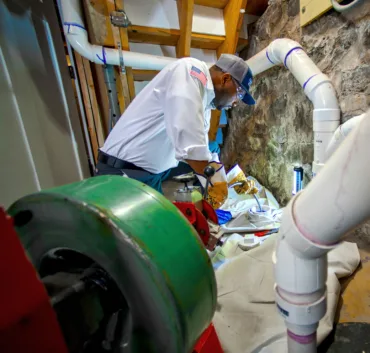
As a homeowner, the last thing you want to discover is that your basement has flooded after a recent storm. An indoor flood can cause catastrophic damage and facilitate mold growth, especially if you don’t discover it immediately.
To prevent this issue, many homeowners install sump pumps, which route water away from their basement to an outdoor location. The sump pump sits within a sump pit below the lowest level of their home. As water levels in the sump pit increase, the sump pump kicks on, pumping excess water away.
The average sump pump can last between 7 and 10 years with proper maintenance. However, that means at some point, homeowners also have to replace them. How much it costs is determined by factors including:
Key Takeaways:
- Sump pump replacement in Michigan typically costs between $200 and $3,800. Final pricing depends on pump type, installation complexity, sump pit modifications, and labor costs.
- The type of pump significantly affects pricing. Pedestal pumps are generally more affordable, while submersible and combination systems cost more due to power and installation requirements.
- Backup systems increase your overall investment. Battery or water-powered backups add protection during outages but can raise your total costs by several hundred to several thousand dollars.
- Replacing a pump costs less than installing one for the first time. New installations may require digging a sump pit, drilling concrete, waterproofing the area, and connecting drainage lines.
- Professional installation protects your home for the long haul. Choosing an experienced plumber reduces the risk of basement flooding, mold growth, and costly water damage.
Type of Sump Pump
The type of sump pump you have directly influences how much your sump pump replacement costs. Pedestal pumps are often more affordable because they’re much easier to access, install, and maintain. A submersible pump will provide more power and efficiency, but they’re also more expensive because they’re harder to install.
Beyond that, the power source factors into the cost equation. A primary electric pump averages between $80 and $1,000 just for the pump itself. Adding a backup battery to ensure your sump pump still works in a power outage can raise that cost to $2,000.
A water-powered pump uses negative pressure to pull water from your pump and is connected to the municipal sewer system. While these are primarily used as a backup system to an electric pump, they also add between $200 and $900 to the cost.
If you instead opt for a combination pump, which can use both electricity and water power to keep your pump working, you’re looking at between $500 and $1,500 for the pump alone.
Installation Complexity
The complexity of the job also factors into the cost due to additional labor. If the space where the sump pump will be installed is difficult to access, it will cost more.
In most cases, sump pumps are installed in a basement or a crawl space. They have to be in the lowest part of your home. However, based on your home’s layout, this could be in your garage or outdoors.
Generally, installing a sump pump in a crawl space will be the most affordable option, but if you have a basement, you can expect to spend between $800 and $2,000.
It’s also typically more affordable to replace a sump pump than installing one for the first time. If you’ve never had one, the sump pit must be drilled or dug into the floor and coated with waterproofing material. Then, it must be hooked up to your home’s drainage system. The labor to build a brand-new sump pit usually runs between $500 and $1,200 before factoring into the cost of drilling through concrete if necessary.
Sump Pit Modifications
Any sump pit modifications necessary for the installation of the new system can also increase costs. If you need to change the size of your sump pit, for example, you have to pay extra costs to cover labor and materials. Alternatively, modifying the sump pit by moving it to a more efficient location can add to the costs of creating a new pit and filling in the old one.