

How Long Do Furnaces Last in Michigan?
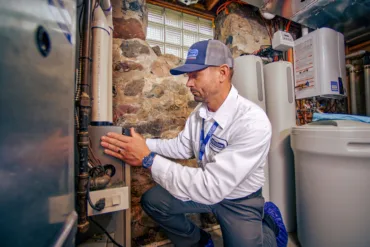
The typical furnace lifespan is around 15 – 20 years. However, hard-working furnaces in chilly Michigan may show signs of wear sooner than in other states. This can be exacerbated by a higher-capacity furnace that cranks up more heat more quickly when you need it.
Whether you’re looking to extend your furnace’s lifespan or contemplating when to plan for a replacement, you’ve probably got many questions. So, to further explain how long furnaces should last, let’s review the key factors that impact performance:
- Your furnace’s AFUE rating
- Your furnace’s size
- How well your furnace is maintained
- Your thermostat settings
With some background information, we’ll empower you to make the smartest choices for your home’s comfort and budget.
Key Takeaways:
- A typical furnace lasts 15 to 20 years, but Michigan’s harsh winters mean most homeowners’ furnaces have shorter lifespans.
- How long a furnace lasts depends on several factors, including its AFUE rating and size.
- Typically, the higher a furnace’s Annual Fuel Utilization Efficiency (AFUE) rating, the longer it will last.
- An improperly sized furnace, whether it’s too large or too small, will likely need repairs or a replacement sooner than a properly sized one.
- Proper furnace maintenance can greatly increase its lifespan. Even small issues can quickly ramp up, cause serious damage, and take months or years off your furnace.
- Playing around with your thermostat too much — turning it up and down frequently — can negatively impact your furnace and cause it to degrade faster.
Your Furnace’s AFUE Rating
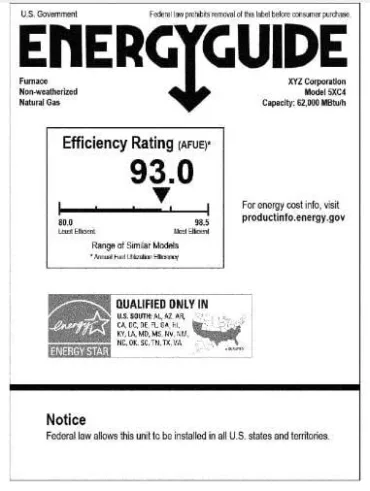
By law, every furnace must have a clear “AFUE” or “Annual Fuel Utilization Efficiency” rating marked on its exterior to let homeowners know how effectively it can heat their home. Typically, the higher a furnace’s AFUE rating, the better it performs and the longer it will last.
A few decades ago, few (if any) furnaces made it to 80% efficiency, which is now the bare minimum. More advanced furnaces can reach 98% efficiency now.
Your Furnace’s Size
An improperly sized furnace for your home will endure more wear and tear, and the sooner you’ll need a replacement.
If your furnace is too big for your space, the excess capacity can lead to “short cycling,” where it produces blasts of heat followed by a shut-down and re-start of the system. It has an overpowered heating capacity for your home. While that sounds like a good thing, short cycling can strain your equipment. A stressed system leads to expensive repairs — or worse — and a reduced lifespan.
On the other hand, a furnace that’s too small will struggle to heat your space. It will constantly run, straining its internal components and increasing energy bills. This can also lead to untimely breakdowns.
If your furnace is starting and stopping constantly, or it seems to be running non-stop, contact Thornton & Grooms for a furnace tune-up. Our friendly and knowledgeable technicians will perform a thorough inspection and present their honest recommendations for repairs or replacement. Our goal is to help you enjoy maximum heating comfort for as long as possible!
You can also check out our blog, Should I Repair or Replace My Furnace? to learn more.
How Well Your Furnace Is Maintained
Just like your car, your furnace is a complex piece of equipment that needs regular cleaning, inspection, and lubrication of key parts to operate safely and efficiently. The better your furnace is maintained, the longer it will last.
Even something as small as a clogged air filter can wreak havoc on your system. In fact, dirty air filters are one of the most common problems impacting furnace repairs and longevity. Without proper airflow, your furnace will overheat, overwork itself, and put stress on key parts like your heat exchanger. When a critical furnace part fractures, it causes dangerous leakage of combustion gasses. Potential cracks are all the more reason to have a professional HVAC technician perform routine maintenance.
At Thornton & Grooms, we have more than 85 years of experience helping Michigan homeowners enjoy longer-lasting furnaces. Schedule a comprehensive 19-point furnace tune-up today.
Your Thermostat Settings

Proper thermostat settings can impact your furnace’s lifespan, too. We commonly see people crank up the thermostat when they want heat urgently, then set it all the way back down when the house is comfortable. Constantly manipulating the thermostat doesn’t do much to maintain an even temperature. It’s also tough on your furnace and will cause its longevity to suffer.
Incremental heating managed by a programmable or smart thermostat is better for your furnace than “full blast” heating which demands a lot of energy consumption from it. In fact, some modern furnace systems offer technology that adjusts operation to manage energy use better, whether you’re warming a cold house or maintaining a set temperature. Manufacturers know the optimal parameters of their furnaces, and service technicians work to stay close to them as much as possible.
To learn more, check out our blog, What Are the Benefits of a Smart Thermostat in Michigan?